What Style of Art Influenced the Design of the United States Capitol
Due northeoclassical architecture first arose in the mid-18th century in both France and Italy, and from there spread across the western world to become one of the almost iconic and prominent styles of compages in modern history. New archeological developments led to the discovery of ancient monuments and temples, equally well as long-lost techniques that would inspire the architects of the emerging Neoclassical way. Neoclassical buildings were created in reaction to the excessive ornamentation of the Rococo and Tardily Bizarre styles, and Neoclassical architecture characteristics were profoundly divers by the social demands of the public rather than the need for aesthetic ornamentation.
Table of Contents
- 1 What Is Neoclassical Architecture?
- 1.1 A Cursory History of Neoclassical Architecture
- i.2 Neoclassical Architecture Characteristics
- ii Famous Neoclassical Architecture Examples
- two.1 Teatro di San Carlo (1737)
- 2.2 Parisian Panthéon (1790)
- two.3 United States Capitol Building (1800)
- 2.4 Basilica of the National Shrine of the Supposition of the Blessed Virgin Mary (1821)
- ii.5 Academy of Virginia Rotunda (1826)
- 2.6 Altes Museum (1830)
- 2.7 Plaza del Mercado de Ponce (1863)
- 2.eight General Grant National Memorial (1897)
- 2.9 Egyptian Museum (1901)
- 2.10 El Capitolio (1929)
- 3 Oft Asked Questions
- 3.ane What Led to the Rising in Popularity of the Neoclassical Style?
- three.ii What Are Some of the Characteristics Of Neoclassical Architecture?
What Is Neoclassical Architecture?
Neoclassical style puts greater emphasis on the wall than the light and shadows created past extruding and sunken structural elements, and each of its parts maintains its own identity. Information technology manifested every bit an adjunct of sure classicizing Late Baroque features and sought to strip abroad some of the more ornate elements of the Rococo style.
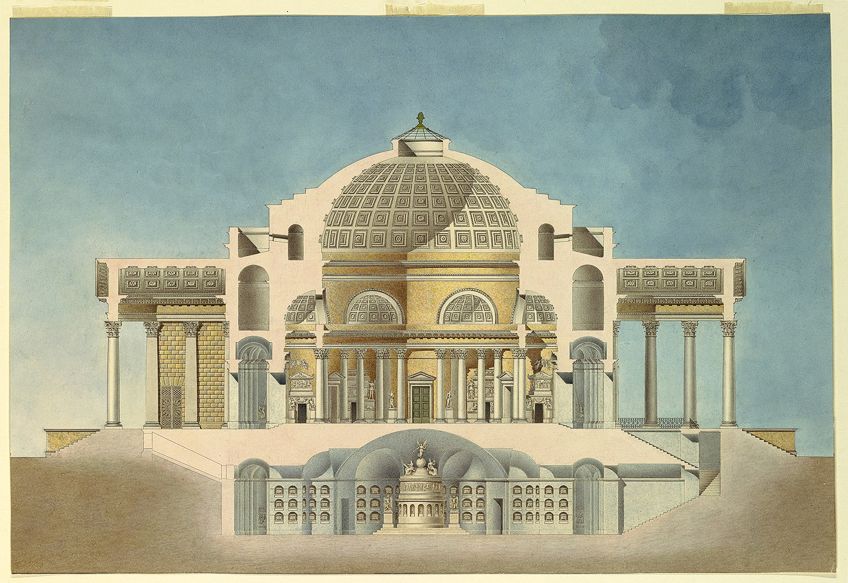 Drawing for an Oratory (Memorial Chapel), depicting a department of a round building. A central, domed hall is surrounded by corridors. Porticos are at left and at right. From the latter, a staircase leads downwards to subterranean rooms. A big sepulchral monument stands in the centre. Other monuments are in the main hall and the corridors. Funerary urns stand in the niches in the basement, c. 1820;Cooper Hewitt, Smithsonian Pattern Museum, Public domain, via Wikimedia Eatables
Neoclassical compages characteristics were besides heavily influenced by the architecture of ancient antiquity that was resurfacing after being buried for hundreds of years and rediscovered due to the ascent in archeological digs around Europe.
Also known equally New Classicism, the Neoclassical manner is characterized by the use of simple geometry, symmetry, and practical social functionality.
A Cursory History of Neoclassical Architecture
The Neoclassical style was synonymous with a specific period in history. Whereas Classical compages as a style nonetheless exists today, many of the movements that were inspired by the compages of antiquity after 1840 are considered revival styles of Classical architecture, whereas Neoclassical architecture is intrinsically connected to a time in the 18th and early 19th centuries. During this fourth dimension certain parts of Europe were going through a period of enlightenment and archeological quantum.
Italian Neoclassical Compages
The influence of Classical compages can be observed in certain structures that were created in reaction to the Rococo fashion in early 18th century Europe known as Palladian architecture. However, it was not until the mid-18th century that the movement began to include influences from the architecture of ancient Greece.
Baroque architects such as Ferdinando Fuga and Luigi Vanvitelli began incorporating elements of Palladian and Classical forms during the 1730s in the city of Naples, an early adopter of Neoclassicism in Italy.
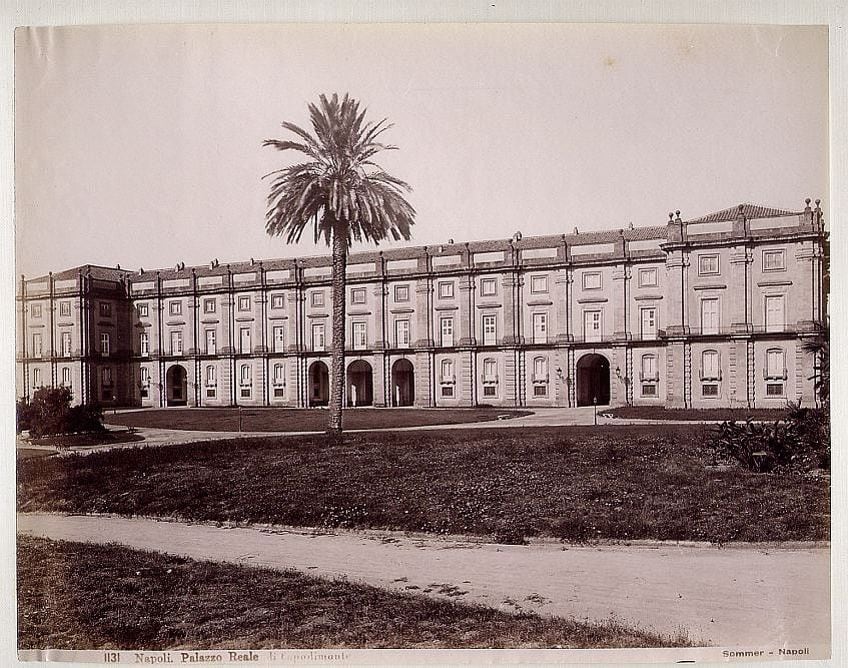 The Royal palace at Capodimonte, Naples, designed by Giovanni Antonio Medrano and constructed between 1738 and 1758;Giorgio Sommer, Public domain, via Wikimedia Commons
During this menses, other architects across Italian republic began to create the first truthful Neoclassical buildings that were distinct from the Palladian style, such equally Giovanni Antonio Medrano, considered the first Italian architect of the Neoclassical style, as well as Jean Nicolas Jadot de Ville-Issey, who introduced the style to Tuscany. Gaspare Maria Paoletti would take influence from Jodot's piece of work and would transform the city of Florence into a very prominent city of the Neoclassical fashion. It would also flourish in Milan and Turin.
English Neoclassical Architecture
During the 1750s the style would spread to other countries such as France and England. In England, there were several factors that led to the gain in popularity of Neoclassical compages. 1 of these factors was the work of the English archeologist Sir William Hamilton, whose excavations at Pompeii and other aboriginal sites fueled much involvement in the compages of Classical antiquity. Another influencing gene was the traditional Grand Tour, which saw immature European men proceed a journey through Europe to gain insights and inspiration.
The architectural work of Robert Adam and William Chambers also had a great influence on the Neoclassical movement in England.
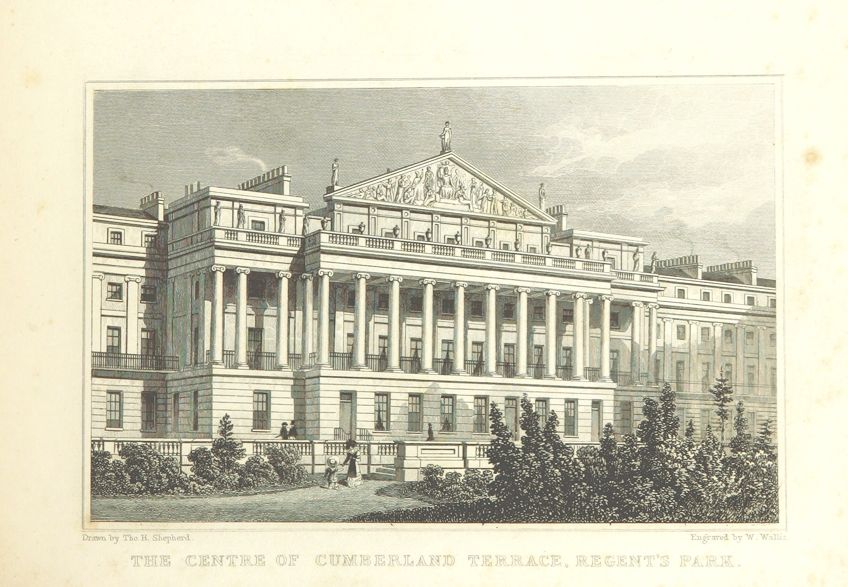 The Eye of Cumberland Terrace, Regent's Park, 1828;Thomas Hosmer Shepherd, Public domain, via Wikimedia Commons
The Bizarre manner had never really appealed to the people of Britain and the British architects employed the Neoclassical fashion in a large variety of civic structures such as post offices, banks, and museums. Entire metropolis blocks were commissioned to be redesigned by architects such as John Nash. John Nash had also designed other famous Neoclassical buildings such equally Buckingham Palace and Cumberland Terrace. Landowners began to refurbish their country homes with columns and porticos.
Another notable builder from United kingdom from this period is Sir John Soane who designed the Pitshanger Manor and the Bank of England.
French Neoclassical Architecture
French artists that had trained in Rome were the greatest proponents of the style in France. The writings of German archeologist and historian Johann Joachim Winckelmann would also have an influence on the architects of France. Towards the end of Louis Xvi's reign, classical features were already starting to appear in the architectural designs of the French architects, only they became more accustomed and fully adopted during the Napoleonic Empire.
French republic would feel another wave of Neoclassicism during the height of the First French Empire.
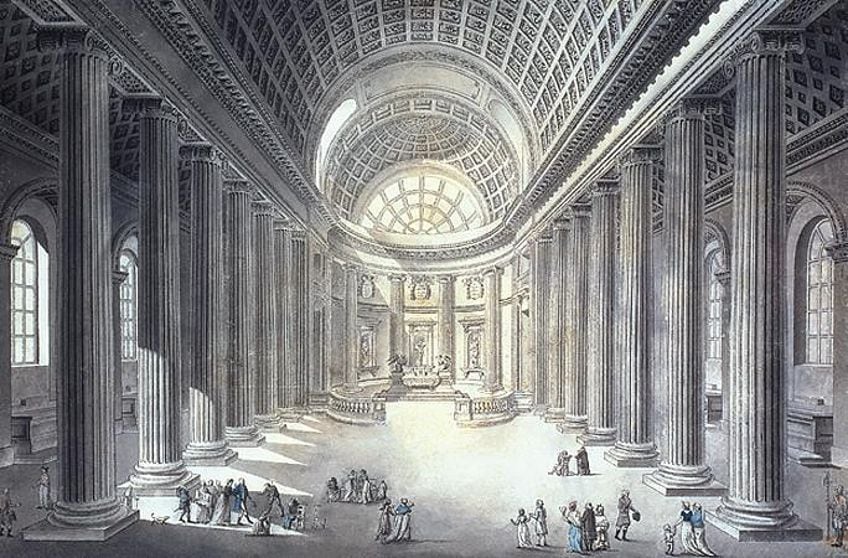 Interior of the Church of Saint-Philippe-du-Roule, Paris, designed past Jean Chalgrin, c. 1785;Jean Chalgrin, Public domain, via Wikimedia Commons
The members of the High Club in France would incorporate elements of the fashion in the design of their private dwellings and architects began to use it in their designs of civic structures. Courtroom architects such as Fontaine and Percier were the prominent figures of this fashion during the menstruation, and the second moving ridge of Neoclassical compages in French republic would be expressed through two styles known as Empire and Directoire.
German Neoclassical Compages
Neoclassical architecture in Germany was fueled by a few sources of inspiration and support. The books of Johann Joachim Winckelmann would take a smashing influence on the German architects, while Friedrich Wilhelm II offered much royal patronage. Architects such every bit Carl Gotthard Langhans and Karl Friedrich Schinkel wanted to transform the German language architectural landscape into one that could hands rival Rome and Paris.
Langhans created the awe-inspiring Brandenburg Gate and Schinkel designed the Altes Museum and the Tegel Palace.
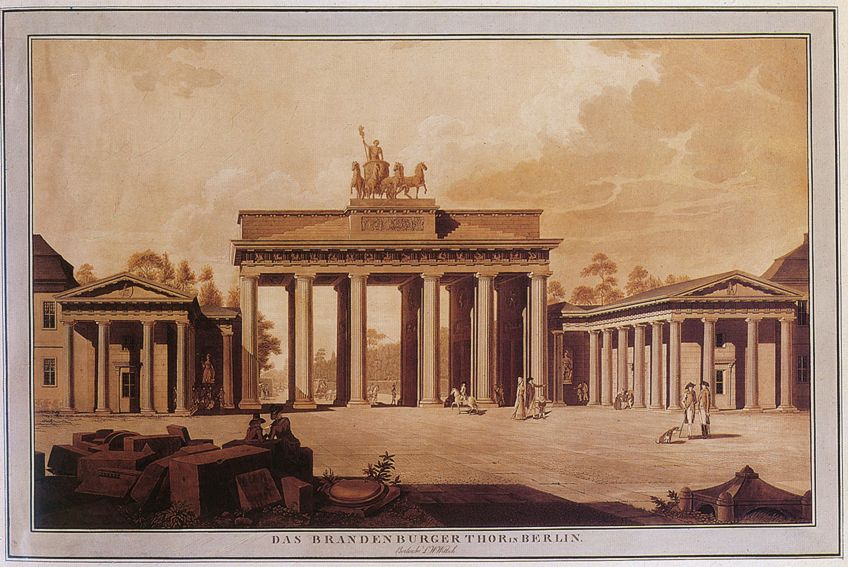 A print of the Brandenburg Gate in Berlin, 1796;Daniel Berger, Public domain, via Wikimedia Commons
Russian Neoclassical Architecture
In Russia, Catherine the Peachy wanted to go against the preferred style of her predecessors which was the High Rococo manner. She showed a great preference for Neoclassical designs over Baroque designs such as the Winter Palace, and she called on Charles Cameron, a Scottish architect, to design the Pavlovsk Palace as well every bit the Alexander Palace. He was also commissioned to redesign the Catherine Palace with Neoclassical extensions, as well every bit Palace Square in St. petersburg.
Other architects of the Neoclassical style were frequently employed past the Czars, including Giacomo Quarenghi and Vincenzo Brenna from Italy.
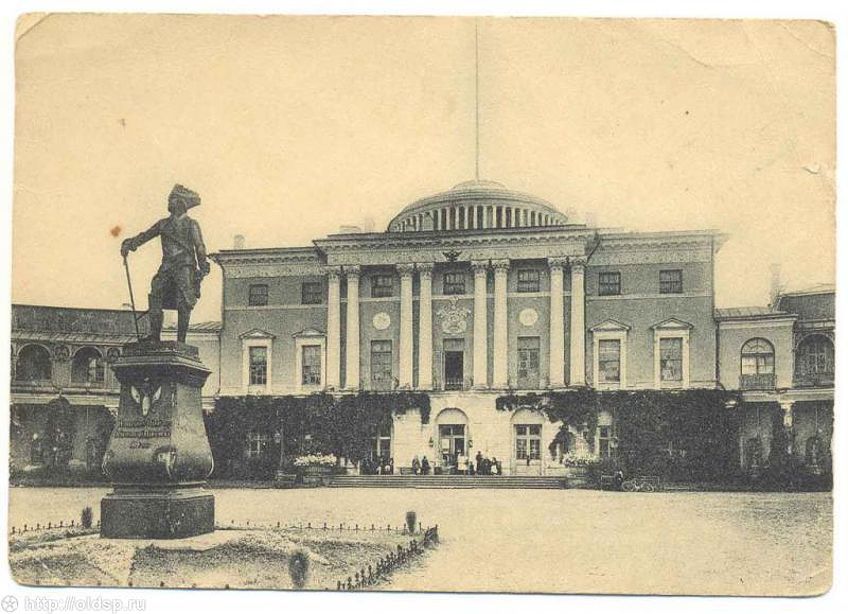 A photograph of Pavlovsk Palace in 1938;Unknown author Unknown author, Public domain, via Wikimedia Commons
American Neoclassical Compages
America had proven itself to be a true home and prominent purveyor of the Neoclassical mode despite its huge popularity in Europe. Elements of the Neoclassical style tin can be plant in the early American architects such as Charles Bulfinch, Benjamin Latrobe, and of course, Thomas Jefferson. The 19th century in America was a time when many civic buildings were being built across the nation.
Thus, Neoclassical architecture characteristics became the staple hallmarks of all the major public institutes, such as memorials, federal buildings, governmental structures, and monuments.
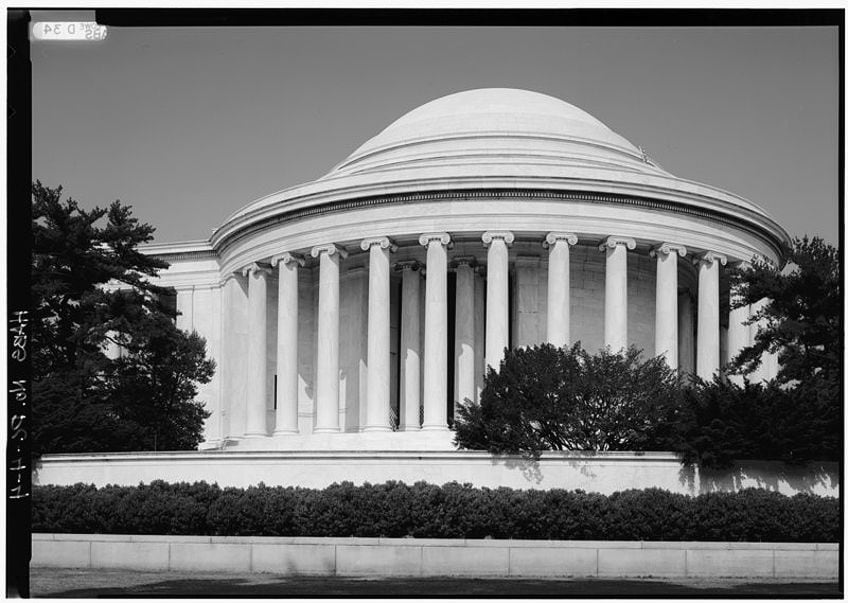 Due east elevation of the Jefferson Memorial, East Potomac Park, Washington, District of Columbia, DC; Lowe, JetRelated names:Pope, John RussellEvans, RudolphJefferson, ThomasSchara, Mark, transmitter, Public domain, via Wikimedia Commons
Neoclassical Architecture Characteristics
The Neoclassical style was renowned internationally and had many regional variations. The architects of the Neoclassical buildings around the globe wanted to steer away from the extreme ornament of the Rococo and Baroque styles in favor of architecture that puts greater accent on planar qualities and emphasizes a stripped-down version of the architecture of Classical antiquity.
In that location was less use of structures that featured protruding and extruding elements such as deeply sunk porches. Bas-reliefs were framed past panels or friezes and were too flatter than before. Less accent was placed on the effects of light and shadow that these architectural elements would enhance. A few other recognizable characteristics are:
- Neoclassical buildings are built on a massive and chiliad scale, meant to impress.
- The floorplans of Neoclassical buildings display a high degree of symmetry.
- Unnecessary, impractical architectural elements were done away with in preference of simplicity of form.
- Neoclassical buildings sought to reach the perfection of the Classical compages originally created by the Greeks and Romans.
- No cluttered ornamentation on the interior or exterior surfaces, which are left make clean, adding to the authoritative nature of the public buildings.
- Roofs of Neoclassical buildings are flat and horizontal, and very often the centers are domed.
- Most structures that contain the Neoclassical style make apply of alpine columns of the Doric or Ionic social club.
- They were built in a specific era, being the 1800s, and were usually surrounded past gardens laid out in geometric patterns.
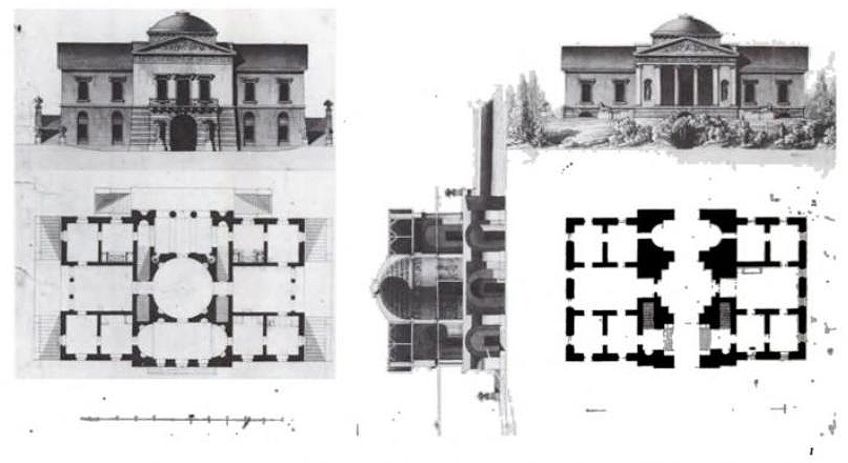 Programme for the Neoclassical villa built for margravine Christiane Louise, 1817; Friedrich Weinbrenner, Public domain, via Wikimedia Eatables
Famous Neoclassical Architecture Examples
Neoclassical buildings commencement started to announced in diverse cities in Italia. From there it spread in popularity beyond Europe and presently became an international style with many regional variations. At present we will explore Neoclassical architecture further by looking at some of the best examples of architecture in the Neoclassical style.
Teatro di San Carlo (1737)
| Location | Naples, Italy |
| Engagement Constructed | 4 November 1737 |
| Architects | Giovanni Antonio Medrano (1707 – 1760) and Antonio Niccolini (1772 – 1850) |
| Type of Building | Opera House |
The Teatro di San Carlo is an opera house situated in Naples, Italia. It has been running continuously since it opened in 1737, and no other venue has been continuously active as the Teatro di San Carlo has been. King Charles Iii of Naples commissioned the theatre to exist built equally the existing Teatro San Bartolomeo that was built in 1621 was proving too small for the growing opera audition.
Giovanni Antonio Medrano, a military architect, designed the opera house, along with the sometime director of the erstwhile theater, Angelo Carasale.
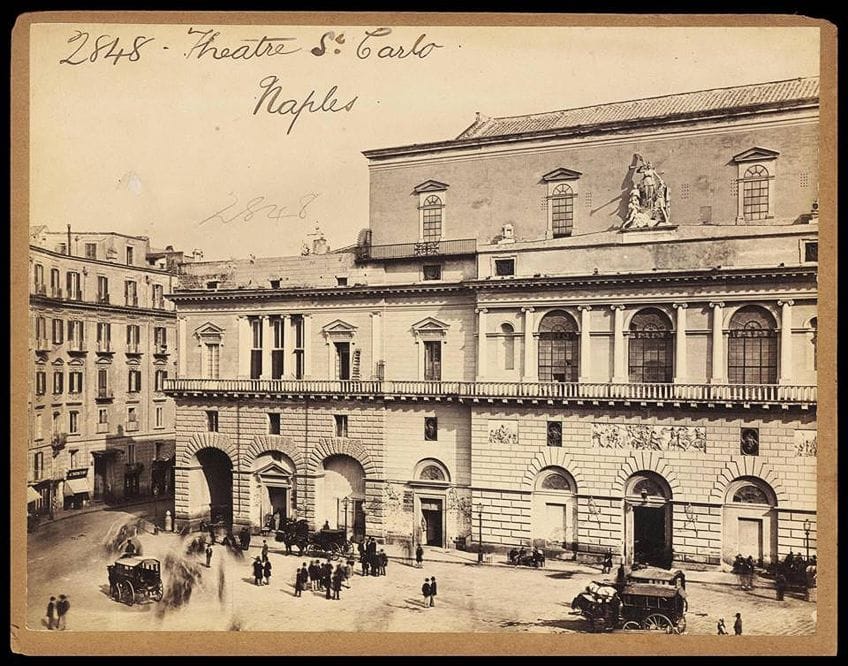 Teatro di San Carlo in Naples, c. 1857;Francis Frith, Public domain, via Wikimedia Commons
During a dressing rehearsal for a ballet operation on the 13th of February 1816, a fire broke out and soon spread throughout the theatre, destroying parts of the Neoclassical building. King Ferdinand IV commissioned Antonio Niccolini to rebuild the opera house, who was able to practise and then in x months. In 1844 Niccolini oversaw farther renovations and redecorations of the opera house along with Francesco Maria del Giudice, and his son Fausto.
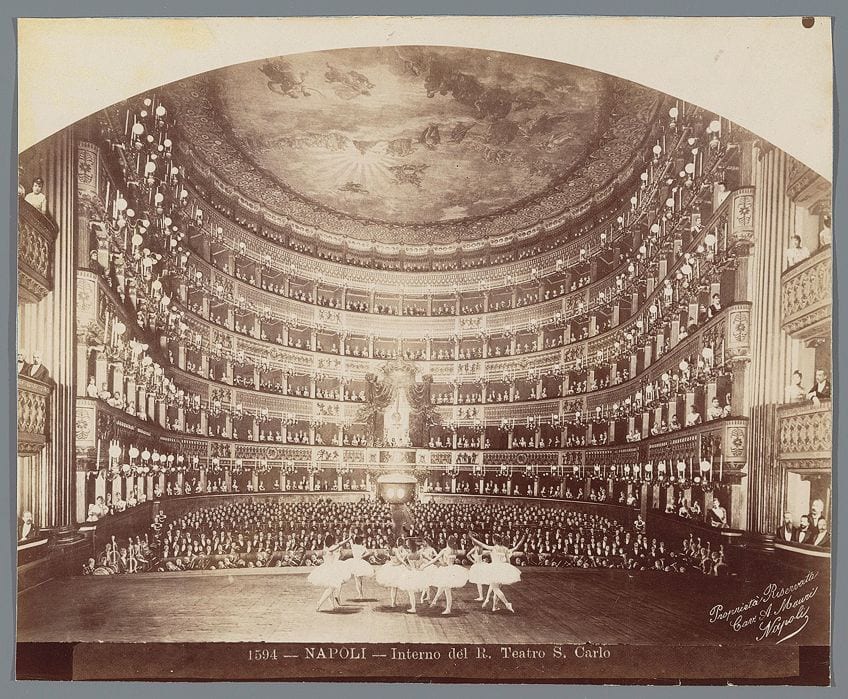 The interior of the Teatro di San Carlo in Naples, c. 1850;Rijksmuseum, CC0, via Wikimedia Commons
In 1872 an orchestra pit was created based on suggestions past Verdi, and electricity was installed throughout the opera house in 1890. The opera house then went through a menstruum of little renovation until major damage occurred due to bombings during Earth War II. Once Naples had been liberated in October of 1943, repairs began under the instructions of Peter Francis of the Royal Arms.
Not only is the oldest opera house all the same in employ, but it is greatly admired for its Neoclassical architecture, golden ornamentation, and lavish blueish furnishings.
Parisian Panthéon (1790)
| Location | Paris, France |
| Appointment Constructed | 1758 – 1790 |
| Architects | Jacques-Germain Soufflot (1713 – 1780) |
| Type of Building | Monument |
The Panthéon is a monument situated in the Latin Quarter of Paris in France. It was built by order of Rex Louis XIV of French republic to the design of Jacques-Germain Soufflot, and construction started in 1758 and concluded in 1790. The structure was originally congenital with the intent of housing a church in dedication to Paris' patron saint, Saint Genevieve.
The church building was meant to house the relics that belonged to the saint. Neither the king nor the architect would live to see the completion of the building.
Like to the Pantheon in Rome which was used to firm the remains of distinguished people, the church was turned into a mausoleum in 1791 for French citizens when it was finally completed at the commencement of the French Revolution.
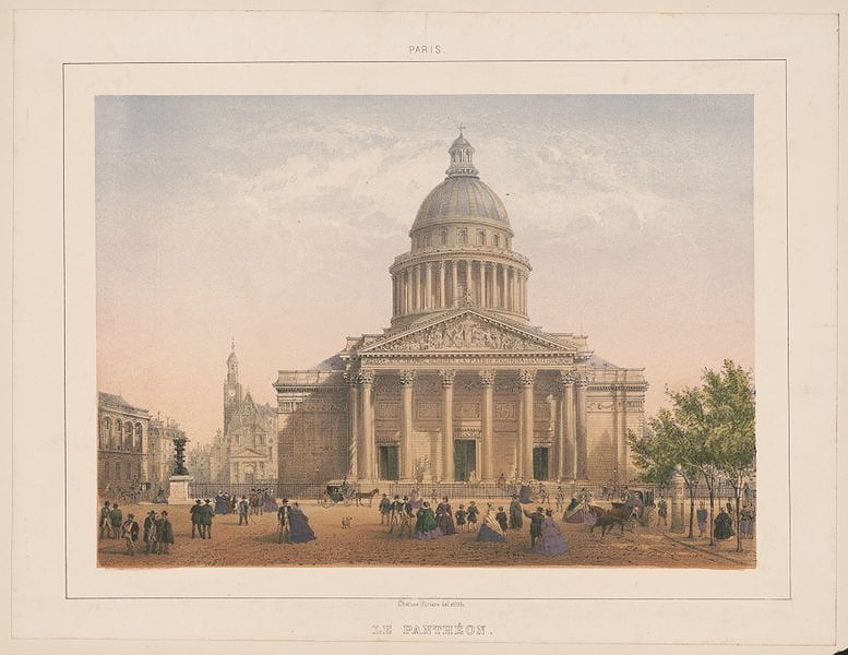 A print showing a street-level view of the Panthéon, Paris, France, with pedestrians on the street in the foreground, c. 1870;Charles Rivière, Public domain, via Wikimedia Commons
During the 19th century, it was restored to its original intended use equally a church twice until it was decreed to exist used as a mausoleum exclusively in 1881. The beginning person to be entombed in fifty years was Victor Hugo, whose remains were placed in the tomb in 1885.
The pediment's decoration inverse several times to adjust the use of the Panthéon and the changes it underwent equally a church and mausoleum.
Many of the windows that were function of the original design were blocked out to darken the interior space to make it feel more somber and suited to the funerary atmosphere. This had the opposite effect that was originally intended past the architect of the building who wished to add classical principles to Gothic architecture and combine lightness and effulgence in the space. The Panthéon is regarded as one of the early Neoclassical architecture examples.
United States Capitol Building (1800)
| Location | Capital Hill, Washington DC |
| Date Constructed | 1793 – 1800 |
| Architects | William Thornton (1759 – 1828) |
| Type of Building | Legislative Governmental Building |
The United States Capitol building is where the congress of the United States gathers and is situated on Capitol Hill. It was completed in 1800 only partially destroyed in the burning of Washington which occurred in 1814. The large dome and extended wings were subsequently additions to the original design. As with virtually of the judicial and executive buildings, the Capitol is white and designed in the Neoclassical style.
Both elevations of the east and western sides are referred to as "fronts", however, the side intended for reception is the eastward front.
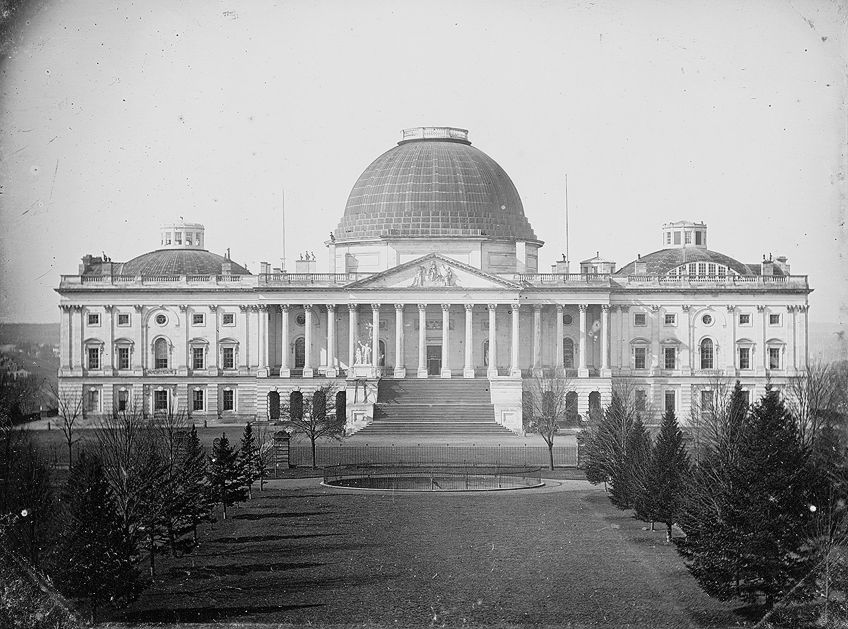 Original dome of the U.s. Capitol, Washington, D.C., east front elevation, c. 1846;John Plumbe, Public domain, via Wikimedia Commons
Thomas Jefferson originally proposed that the design for the building should be chosen past running a competition that would have a deadline of four months. The prize for winning the contest was five hundred dollars and around 10 various designs were submitted, withal, the lack of existent designers of American Neoclassical architecture at the time was fabricated glaringly credible by the amateur level of the crude drawings that were submitted.
The but submission to bear witness any real promise was that of the French architect, Stephen Hallet, whose work was deemed too French in influence and as well costly to build due to its fanciful design.
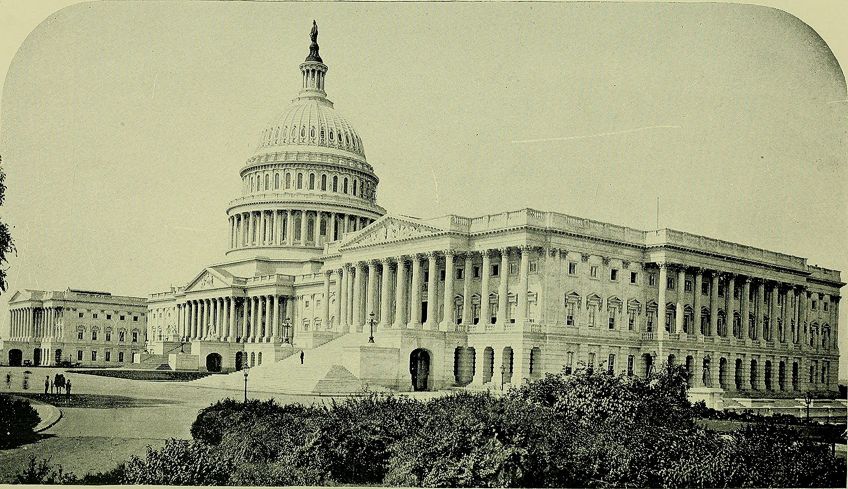 A photograph of the Capitol edifice subsequently reconstruction, 1909;Internet Archive Book Images, No restrictions, via Wikimedia Commons
On the 31st of January 1793, a late entry was submitted past William Thornton, an amateur British-American architect, which was praised by Jefferson and the rest of Washington equally beautifully simple and one thousand. He stated that his designs drew influence from the Pantheon in France as well as the front of the Louvre. The famous large dome was only added to the Capitol edifice during an expansion that lasted from 1856 to 1866 and was designed by Thomas U. Walter. Originally, a small wooden dome was situated in the aforementioned place, which was designed by Charles Bulfinch.
Basilica of the National Shrine of the Assumption of the Blessed Virgin Mary (1821)
| Location | Baltimore, Maryland |
| Engagement Constructed | 31 May 1821 |
| Architects | Benjamin Henry Latrobe (1764 – 1820) |
| Type of Building | Church |
As well known equally the Baltimore Basilica, this Neoclassical edifice was the first American Roman Catholic cathedral to be synthetic. It was designed by the commencement American architect to be professionally trained, Benjamin Henry Latrobe, and it took from 1806 until 1863 to construct. The basilica conformed to certain traditional elements of cathedral design such equally a Latin cross basilica layout, which was different from Latrobe's other American church designs.
 Basilica of the National Shrine of the Supposition of the Blest Virgin Mary, Baltimore, 1907;Internet Archive Book Images, No restrictions, via Wikimedia Commons
He had to create his own vision within the boundaries of the European tradition of cathedral architecture, with the programme displaying the unity of two distinct elements: the domed space and a longitudinal axis.
The facade of the Basilica reflects the classical Greek portico with its hexastyle patterned Ionic columns. 2 towers rising from backside the facade, topped with onion-shaped domes. Silver-grey gneiss was sourced from quarries in Ellicott Urban center. A masonry dome was originally planned past Latrobe, but a wooden double-shell blueprint that included 24 skylights was suggested to the architect by his friend Thomas Jefferson.
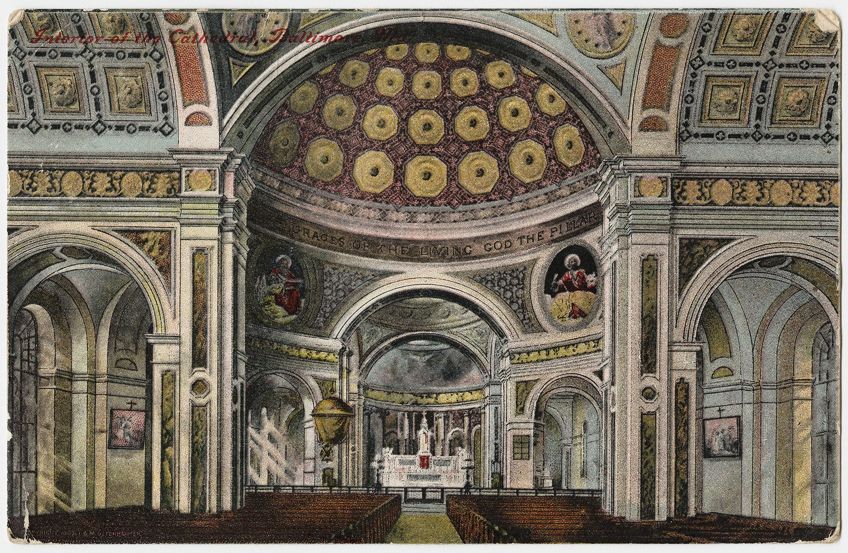 Basilica of the Assumption of the Blessed Virgin Mary, interior, Baltimore, Maryland, circa 1907-1910; National Trust Library Celebrated Postcard Collection, Special Collections, Academy of Maryland Libraries., Public domain, via Wikimedia Eatables
Latrobe constructed a masonry hemisphere with classical details for the inner dome, which was adorned with grids of rosettes made of plaster along with the coffered ceiling. In the interior of the building, a huge dome is situated at the crossing of the Latin cross pattern, thus a centralizing outcome is created. The chief dome is surrounded by smaller domes.
Latrobe managed to fill the interior of the church building with much natural lite, a definitive characteristic of American Neoclassical architecture compared to the traditionally dark interiors of Gothic-style cathedrals.
University of Virginia Rotunda (1826)
| Location | University of Virginia |
| Date Constructed | 1826 |
| Architects | Thomas Jefferson (1743 – 1826) |
| Blazon of Building | Rotunda Library |
Thomas Jefferson was the founder of the University of Virginia and also the designer of the Rotunda, which was created as the Academical Village's centerpiece. It was originally designed equally the library and kinesthesia pavilions flanking the Rotunda on either side. Jefferson presented plans for the Rotunda two years afterwards the University was established.
When he died five years later on in 1826, information technology was still under construction due to ongoing problems and delays, such equally a leaking dome.
In 1841, due to an increment in enrollments at the University, two wings that were originally created as roofed exercise yards were walled off to create more infinite for classrooms. Another addendum was synthetic from 1851 to 1854 to house a laboratory and an auditorium. Both the annex and the Rotunda were damaged in a fire that bankrupt out on the 27th of October, 1895. Many architects were brought in to aid rebuild the Rotunda such as McDonald Brothers architects, a firm from Louisville in Kentucky.
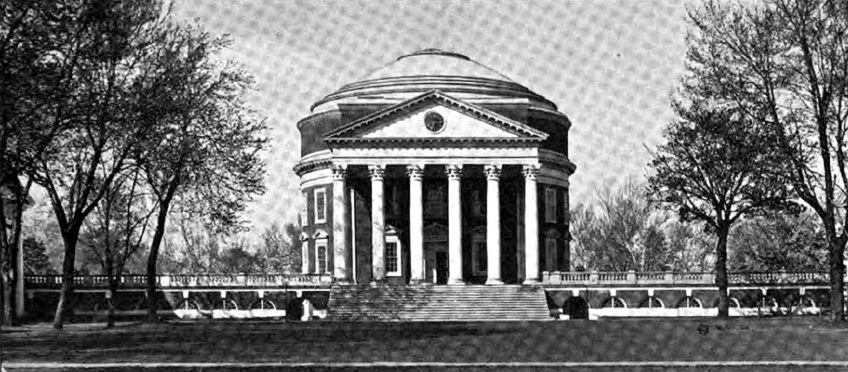 Photograph of the University of Virginia Rotunda, 1920;Unknown photographer, Public domain, via Wikimedia Eatables
What made the Rotunda a unique characteristic of the university compared to others of the same menses is that it housed a library and not a church. Jefferson believed that at that place should exist a clear stardom and separation of education and religion, and many scholars believe that the Rotunda was built every bit a symbol of Jefferson'southward dedication to architecture and instruction. In 1966 information technology was designated the title of being a National Historic Landmark.
Several buildings are cited as existence influential on Jefferson's designs for the Rotunda, such as the Pantheon, and he was said to have also hugely admired the work of the Palladian builder, Andrea Palladio.
Altes Museum (1830)
| Location | Lustgarten, Berlin, Deutschland |
| Date Synthetic | 1830 |
| Architects | Karl Friedrich Schinkel (1781 – 1841) |
| Blazon of Building | Museum |
The Altes Museum is regarded as an important piece of work of Neoclassical architecture in Germany and is listed as part of the UNESCO World Heritage. King Frederick William III of Prussia ordered the building to be constructed in 1825, based on the designs of the Prussian builder Karl Friedrich Schinkel and was completed in 1830. It is surrounded by the Zeughaus building, the Berlin Palace, and the Berlin Cathedral.
The growing class of German suburbia in the early 19th century embraced new ideas about public access to the arts and felt it was their responsibility to create public buildings that would give society this access and would increase the level of cultural intelligence of the full general populace by doing so.
King Friedrich Wilhelm III was a believer of this ideal and ordered Karl Friedrich Schinkel to pattern a museum that would allow the people of Frg to view the royal art collection.
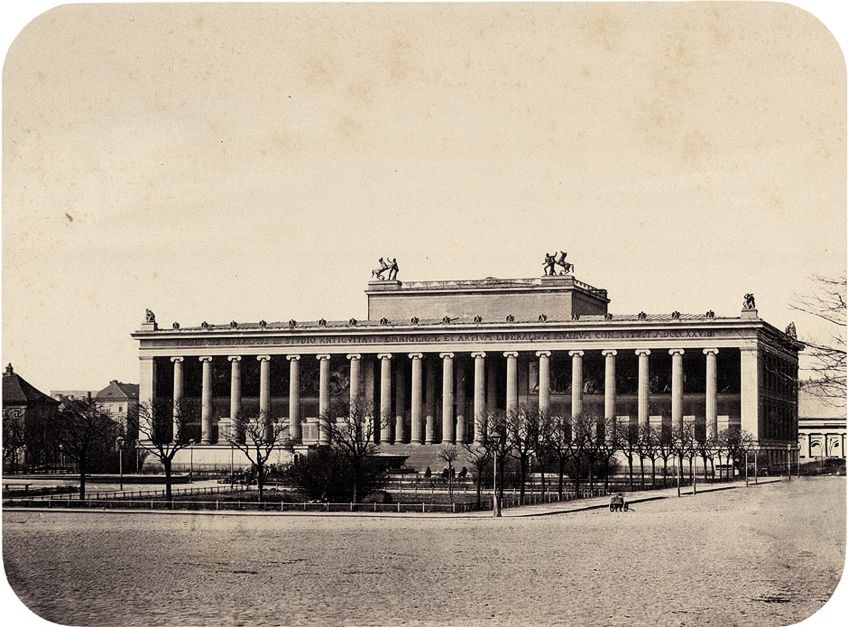 A print of the Altes Museum and Lustgarten, Berlin , 1850s;Leopold Ahrendts, Public domain, via Wikimedia Eatables
The King's son (subsequently King Friedrich Wilhelm IV) also had ideas for the design and sent Schinkel drawings that were heavily influenced past the architecture of artifact. Schinkel managed to create a design that incorporated elements of the prince's sketches as well as his own ideas. The northern part of Spree Island was transformed into a hub and sanctuary for science and art under royal decree from the male monarch in 1841.
Although the building was originally created to house the paintings of the Old Masters and other of the city's fine arts, since 1904 it has but exhibited the collection of classical antiquities.
Plaza del Mercado de Ponce (1863)
| Location | Ponce, Puerto Rico |
| Date Constructed | 1863 |
| Architects | Timoteo Luberza (1820 – 1895) |
| Type of Edifice | Market place Edifice |
The Plaza del Mercado de Ponce is situated in the town of Ponce in Puerto Rico and is a historical marketplace edifice of the Neoclassic style, and was designed by Timoteo Luberza, a famed engineer and architect. Luberza had been inspired by the design of the Les Halles market place in Paris. When it was congenital in 1863, it was the most modern and biggest market place in all of Puerto Rico.
It was during the remodeling and enlargement of the building in 1903 that architect Manuel V. Domenech added the Neoclassical designs.
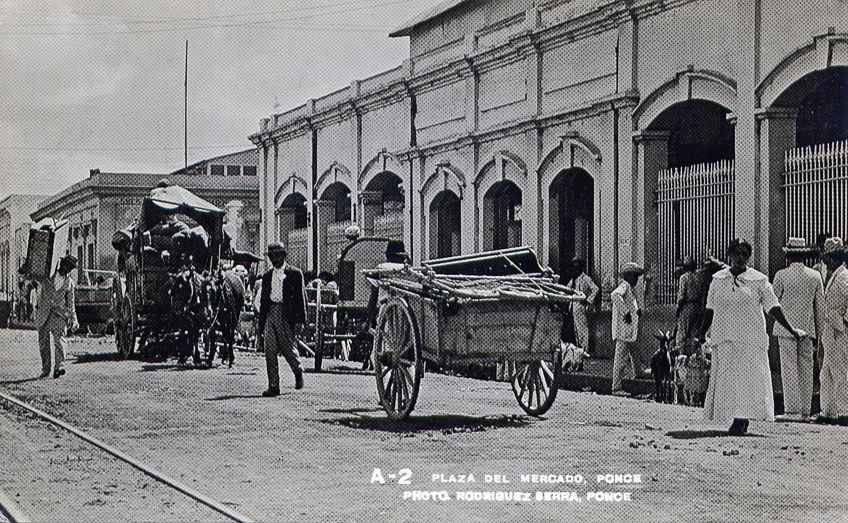 Photographic print of the Plaza del Mercado, Ponce, 1920;Juan Rodriguez Serra, Public domain, via Wikimedia Commons
A second market was built in the 1900s after the market once again became too minor to cater to the ever-growing number of inhabitants. Therefore in 1941 the edifice was once again remodeled and enlarged, this time according to the plans and design of Pedro Mendez Mercado. During this menses, the facade was changed to more of an art deco style.
An aspect of this building that is unique among others in Puerto Rico, is that the original construction is even so preserved within the interior, despite the amount of remodeling and enlargements that were added over the years. Through the many years of its existence, the facade of the Plaza del Mercado de Ponce has undergone several stylistic adaptations, including neoclassical and art deco.
In the modernistic era, the building is used for festivals and other similar gatherings.
Full general Grant National Memorial (1897)
| Location | New York Metropolis |
| Date Constructed | 27 April 1897 |
| Architects | John H. Duncan (1855 – 1929) |
| Type of Building | Memorial |
When the 18th president of the United States, Ulysses S. Grant died in 1885, his wife Julia Grant stated that he had desired to be buried in New York. A committee was created called the Grant Monument Association to heighten funds for the proposed tomb and monument. Since in that location were as still no plans to evidence, and many people felt that the memorial should be in Washington DC, fundraising efforts were at first very deadening.
A design proposed by John H Duncan was eventually selected due to its armed services character and was said to be inspired by the Mausoleum of Halicarnassus.
Duncan became the architect through a contest. The competition was announced by the Grant Monument Association on the 4th of February 1888 in a newsletter and was made public to everyone in the nation, and was as well published in Europe. Later being rescheduled several times, a terminal deadline for the competition was gear up for the 10th of January 1889. Out of the 65 entries that the competition received, 42 of them came from outside of America.
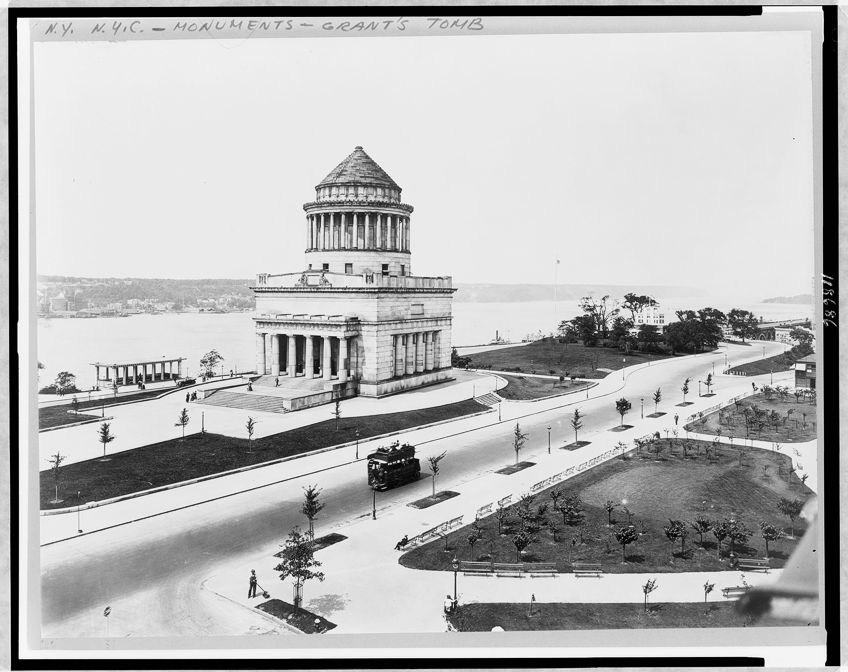 Bird's-middle view of Grant'southward Tomb, New York, 1915;Miscellaneous Items in Loftier Need, PPOC, Library of Congress, Public domain, via Wikimedia Commons
The Grant Monument Association did not find any of the entries suitable and did non choose a winner from the competition. A second contest was then ordered past the association, who then chose a winner out of merely five entries. That winner was John H Duncan.
Duncan had already fabricated his mark on the architectural world with his work designing several other notable buildings in 1883, such as The Tower of Victory, The Newburgh Monument, and the Washington Monument in Newburgh. He had created these monuments to commemorate the U.S Revolutionary State of war, and his pattern for Grant'due south Tomb would too reflect an unmistakably militaristic character.
He wanted the monument to be a symbol of respect and reverence and did not desire it to have whatever aspects that resembled a habitable dwelling.
Egyptian Museum (1901)
| Location | Cairo, Egypt |
| Date Constructed | 1901 |
| Architects | Marcel Dourgnon (1858 – 1911) |
| Type of Building | Museum |
The Egyptian Museum is also known equally the Museum of Egyptian Antiquities and was built by Garozzo-Zaffarani, an Italian visitor, in 1901. One of the largest museums in the region, it was built to the design of Marcel Dourgnon, a French architect. The museum contains many pieces of important Egyptian history too every bit the largest collection of Pharaonic artifacts in the world.
The collections had previously been housed at another museum that was established by the Egyptian Government in 1835, and finally moved to the Egyptian Museum subsequently being stored at the former royal palace due to the previous museum being flooded.
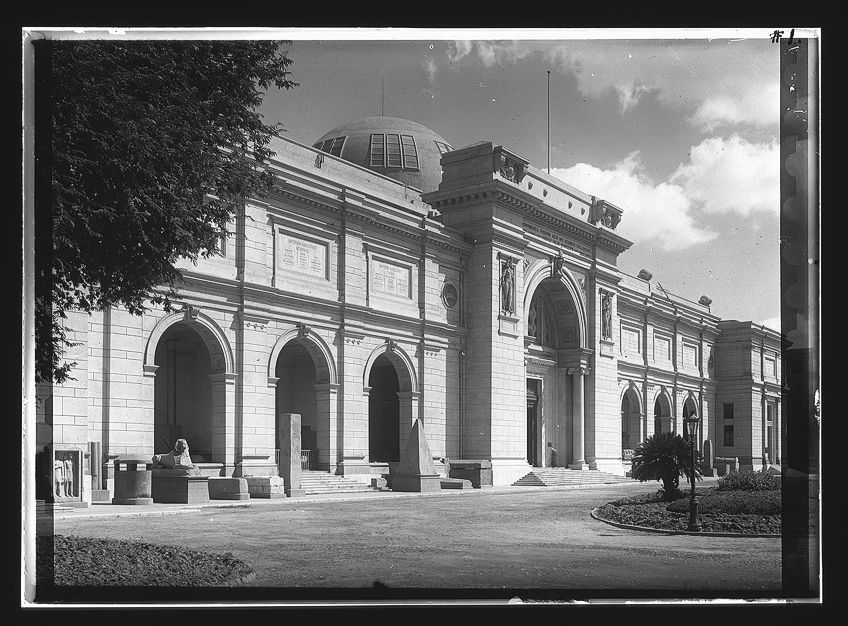 Egyptian Museum, Cairo, betwixt 1898 and 1946;Matson Collection, Public domain, via Wikimedia Eatables
Wafaa El Saddik was appointed the first female person Manager-General of the museum in 2004. In 2011, two mummies were destroyed when the museum was broken into during the Egyptian Revolution. Approximately 50 objects were stolen and many more were damaged. This beautiful Neoclassical building contains two floors, the footing flooring showcases architectural elements and other large-scale works including reliefs and statues from the predynastic to the Greco-Roman period.
El Capitolio (1929)
| Location | Havana, Cuba |
| Date Constructed | 1926 – 1929 |
| Architects | Eugenio Raynieri Piedra (1883 – 1960) |
| Type of Edifice | National Capitol Building of Cuba |
El Capitolio was commissioned by Gerardo Machado, the Cuban president, and was congenital nether the direction of its builder Eugenio Rayneri Piedra. Structure of the capitol building lasted from 1926 until 1929. The country used to vest to the Villanueva Railway and was used as a railroad concluding.
Construction began during the Gerardo Machado administration and was used to house congress until information technology was abolished subsequently the Cuban Revolution and it roughshod into a state of disrepair.
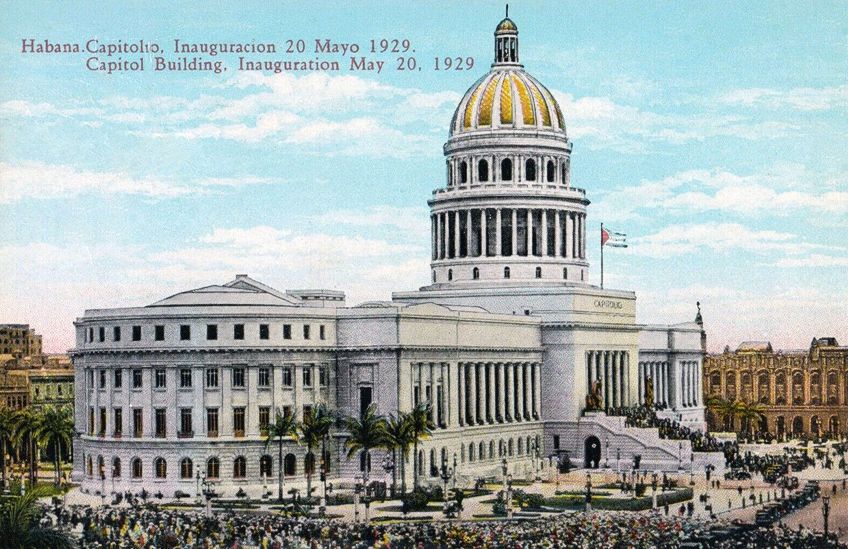 A postcard of El Capitolio, the Capitol building in Havana, Cuba, 1929; Carlos Jordi, Havana (publisher), Public domain, via Wikimedia Commons
This capitol building is often likened to that of the United states of america' ain capitol building, simply information technology is non a replica, existence designed with greater detail and existence larger than its US counterpart by a meter in pinnacle, width, and length. Despite its resemblance to the US Capitol building, the architect says the cupola of the edifice was inspired past that of the Panthéon in Paris. The gardens take been based on the designs of European gardens, with large areas of lawns bordered by paths.
Nether the cupola, inside the main hall, one can find the Statue of the Commonwealth, which weighs 49 tons and is covered with 22-carat gilt leaf. At the time of its construction, it was the 2d tallest statue to be constitute indoors. It was created by Zanelli who cast it in Rome in three parts and assembled it inside the building upon its inflow in Cuba. Athena was cited as being the inspiration of the statue, and information technology was modeled on the trunk of Lily Valty, a Creole Cuban.
Today nosotros have learned that Neoclassical buildings were starting time created in reaction to the excessive ornamentation of the Rococo and Belatedly Baroque styles and that Neoclassical architecture characteristics were profoundly defined past the social demands of the public rather than for artful reasons. Neoclassical architecture first arose in the mid-18th century in Italy, and from there spread to France so across the western globe to get one of the about iconic and prominent styles of architecture in mod history.
Frequently Asked Questions
What Led to the Ascent in Popularity of the Neoclassical Manner?
New archeological developments led to the discovery of ancient monuments and temples, equally well as long-lost techniques that would inspire the architects of the emerging Neoclassical style. Architects wanted to move away from the excessive ornamentation of the previous pop movements such as the Rococo and Baroque motion and wanted to return to the simplicity of the ancient architecture of the Greeks and Romans.
What Are Some of the Characteristics Of Neoclassical Architecture?
The architects of Neoclassical compages put a greater focus on the wall design than the chiaroscuro created by extruding and sunken structural elements. Each of the edifice'southward parts maintains its own identity within the structure. The style kickoff began as an adjunct of certain classical elements of the Late Baroque period and the aim was to strip away some of the more unnecessarily ornate elements of the preceding Rococo style. Neoclassical architecture characteristics were likewise heavily influenced past the architecture of aboriginal antiquity that was resurfacing later existence buried for hundreds of years and rediscovered due to the rise in archeological digs around Europe. Also known every bit New Classicism, the Neoclassical way is characterized past the use of elementary geometric shapes, symmetry of form, and applied social functionality. The buildings of the Neoclassical catamenia display a sense of potency and grandeur.
grantsholexpeetry1946.blogspot.com
Source: https://artincontext.org/neoclassical-architecture/
0 Response to "What Style of Art Influenced the Design of the United States Capitol"
Post a Comment